
As an example, when Fitz, the irreplaceable facilities manager of many years, retired from a busy office complex, it became immediately evident how much his institutional knowledge kept the ship steady. Despite assurances of thorough written instructions for his successor, Fitz left behind notes that were more cryptic than enlightening, leaving Sarah, the newly minted facilities manager, to interpret a puzzle without all the pieces.
From an ownership perspective, Sarah's struggles highlighted a deeper issue: the lack of integrated, real-time data essential for strategic decision-making. Hoping to provide answers, Sara turned to the facility condition assessment report completed five years ago. Unfortunately, it was outdated and unhelpful. She and the property owner felt like they were navigating the modern world with a rotary phone.
The operations had a CMMS, but while it tracked work orders and maintenance history, it didn't capture the property's inventory and condition assessment captured in the most recent FCA. This came as a shock to the property owner, who thought they’d been sold an integrated system!
This disconnect in the CMMS system would prove costly in more ways than one. During the hottest week of summer, the HVAC system failed. With incomplete information on hand, Sarah procured incorrect replacement parts. This misstep resulted in prolonged repair work, leaving the building sweltering and tenants frustrated. The fallout wasn’t just uncomfortable; it threatened tenant retention and impacted the building's reputation.
Worse still, a minor roof leak transformed into a collapse at the Fitness Center, closing it for a year and racking up millions in damages. These incidents served as sobering reminders that institutional knowledge, once lost, is hard to recover, making the need for a robust system that captures and retains this information more critical than ever.
Had Sarah been able to access an updated system showing current work orders and Living FCA data, complete with maintenance history, manuals, warranties, and current condition, this would have highlighted that the minor roof leak was a sign of more extensive issues, enabling Sarah to prioritize a thorough roof inspection and potentially avoid significant damage.
The Need for Continuous Data Flow and Real-Time Collaboration
Generally, a service provider compiles a report, the owner drafts a plan, and those plans gather dust as daily urgencies take over, leaving fresh insights to languish until crisis knocks on the door again. The lack of continuity not only hampers immediate response effectiveness but also hinders long-term asset value appreciation.
 So, how can we change this pattern and establish enduring partnerships while generating reliable, real-time building data? Can owners handle this on their own? It's possible, but data collection and updating require time, expertise, and sometimes specialized tools. Owners may lack these resources, particularly those with limited staff or budget for facility management.
 Can service providers handle this solely for owners? Again, it's possible, but conditions change constantly due to usage, weather, and other factors. Keeping data up-to-date in real-time without boots on the ground is challenging. Furthermore, integrating FCA tools with existing systems (CMMS, BMS) can be complex and time-consuming, and most providers lack the IT infrastructure to support it.
What's needed is a modern, collaborative strategy. This is where AkitaBox enters the scene, providing a centralized platform for real-time data management that enables property owners and providers to collaborate effectively and preserve that invaluable institutional memory. AkitaBox doesn’t just bridge the gap between outdated data and current needs; it creates a dynamic ecosystem where data flows effortlessly, updated continually, ensuring every decision is backed by the latest insights.
-
Our industry's tendency to treat data collection, action planning, and knowledge transfer as intermittent tasks rather than ongoing processes creates a fundamental weakness in building management that often leads to disorganization and inefficiency.
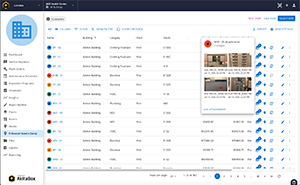
For owners, this means understanding and maximizing your asset’s potential across all operational levels. AkitaBox facilitates this by offering customizable data inputs and outputs, allowing all parties to operate from the same playbook. This eliminates misunderstandings and drives informed, strategic decisions. Key functions like CMMS, inspections, capital forecasting, and reporting are built on robust asset data and meticulously detailed floor plans. With AI and OCR technologies streamlining data entry, transitioning from paper chaos to digital clarity becomes straightforward and efficient.
After capturing the data, the platform's capabilities explode into action. Providers use RSMeans or their custom catalogs for accurate cost and lifecycle predictions, while owners unlock comprehensive work order management and create proactive maintenance schedules connected to the latest asset data. This continuous update cycle ensures that whether it's routine maintenance or unexpected issues, solutions are founded on the most accurate information available.
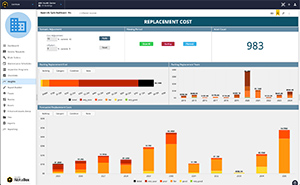
AkitaBox allows property owners to document nuanced details, like temperamental HVAC behaviors or persistent roof leaks, ensuring these crucial insights are preserved to outline the full scope of the building’s condition. While traditional paper reports serve their purpose, AkitaBox’s interactive Dashboards dynamically turn data into vivid, easy-to-understand, and actionable reports that inform and engage stakeholders.
These Dashboards offer both macro and micro views of building health, costs, and asset conditions aligned with strategic objectives. This wealth of valuable, actionable data empowers owners to turn property management into a forward-looking, value-boosting venture—not only safeguarding current assets but preparing them for future success. It provides a platform where insights lead to action and action leads to tangible value.
Embracing a solution like AkitaBox positions your property to strategically navigate challenges, enhancing both short-term performance and long-term asset value. Transitioning from reactive problem-solving to proactive investment management isn’t just about maintaining your current portfolio—it’s about future-proofing your real estate investments against a rapidly evolving landscape. The future is about making every detail count and ensuring your assets are not just sustainable, but thriving.