THANK YOU FOR SUBSCRIBING
× 
Prop Tech Outlook Weekly Brief
Be first to read the latest tech news, Industry Leader's Insights, and CIO interviews of medium and large enterprises exclusively from Prop Tech Outlook


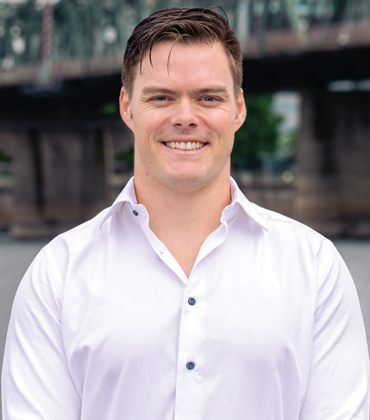 Huston Hedinger, Cardinal CEO
In commercial property management, owners, asset managers and property managers often manage tenant communication, vendor coordination and day-to-day activity across emails, texts, portals and other disconnected channels. As portfolios grow, that fragmentation makes it harder to maintain a clear view of activity across a property. Important details fall through the cracks, follow-up becomes inconsistent and teams lose sight of previous communication, actions and agreements.
Cardinal was built from firsthand experience with those challenges. Developed by a team of owners and operators of commercial real estate and commercial real estate technology, the platform reflects a practical understanding of what happens when communication, issue tracking and day-to-day workflows are fragmented. Cardinal brings those functions into one shared environment where teams can see, manage and act on information collectively.
“Property management doesn’t break because of a lack of software. It breaks because things fall through the cracks,” says Huston Hedinger, CEO. “Cardinal was built to close those gaps and bring accountability to every part of operations.”
Shared Communication, Faster Execution
How does Cardinal support visibility and coordination across property management communication workflows?
Cardinal’s workflow is designed around how property operations function. Tenants, vendors and other stakeholders can interact in a way that is visible to the broader team rather than sitting with one property manager in an isolated inbox. That makes it easier to see what needs attention, what has already taken place and who is responsible for the next step.
This structure improves how teams respond. When communication is delayed or hard to trace, friction grows quickly, whether tenants are waiting on a response or landlords are trying to understand what action has been taken. By keeping communication, issue tracking, maintenance activity, vendor follow-up and knowledge management in the same platform, Cardinal gives teams a more direct path from message to execution. Property-level information tied to leases, rent, square footage and ongoing activity also remains accessible, supporting better day-to-day decision-making and lease administration.
Just as important, earlier communication and decisions remain available to the wider team. That makes it easier to understand relationship history and current status without reconstructing context from separate threads.
Stronger Continuity, Better Oversight
Why does operational continuity become critical when responsibilities shift across commercial property portfolios?
A second challenge Cardinal addresses is the loss of operating knowledge when responsibilities shift. By retaining information about tenants, leases, properties and prior decisions inside the platform, it increases access to tribal knowledge and preserves it through transitions across the portfolio.
In what way did centralized information improve efficiency and onboarding within customer portfolio management?
That benefit became especially clear in one customer relationship involving a portfolio spanning over one million square feet. The client, which was working with an outsourced property manager, initially set up Cardinal back in August. Cardinal was first introduced for the owners and asset manager and then expanded to include the outsourced property manager.
As adoption grew, team members were able to step into different properties and get up to speed more quickly because the relevant context was already captured in the platform. The biggest success came when the portfolio manager left in late December of 2025. Because everything was centralized the new portfolio manager was up to speed in days not weeks or months, and nothing was missed. This same customer also reduced monthly meeting preparation from roughly two to three hours, while meeting time itself fell from about 90 minutes to 20 to 25 minutes as collaboration became more continuous and context was already there and didn’t require reconstruction.
Cardinal’s product direction is shaped by a team that combines product expertise with real estate operating experience. That mix allows the company to identify workflow problems from a practitioner’s perspective, test proposed features against real operational needs and refine the platform through direct customer feedback.
Building on this foundation, Cardinal continues to expand across the property management workflow. Emails, issues, knowledge management, and custom AI integration are part of that progression, reflecting the company’s aim to become a broader operating platform for property managers, asset managers and commercial real estate owners. In a market where communication and day-to-day coordination often break down across disconnected systems, the biggest operational risk isn’t the software they’re using — it’s the gaps in between and information that lives in no software at all.
Cardinal A More Cohesive Approach to Property Management Software
Property management teams continue to operate in environments where fragmentation, rather than lack of tools, creates the most persistent inefficiencies. Communication spreads across email, text, vendor portals and internal trackers, leaving teams to reconcile incomplete information while trying to maintain responsiveness to tenants and owners. The result is not simply slower workflows but a gradual erosion of accountability, where tasks slip through gaps and institutional knowledge becomes tied to individuals rather than systems.
Executives evaluating property management software are increasingly less concerned with surface-level reporting and more focused on how work actually moves across teams. Visibility into communication has become central to this shift. When conversations with tenants, vendors and internal stakeholders remain siloed, coordination depends on manual follow-ups and individual vigilance. A system that captures and shares communication in a unified environment allows teams to respond with context, not guesswork, reducing delays that often appear as service failures to tenants.
Closely tied to this is the ability to translate communication into structured action. Maintenance requests, vendor coordination and lease-related decisions require more than tracking tools layered on top of inboxes. Teams benefit from workflows that connect conversations directly to issue resolution, ensuring that tasks are not only recorded but progressed in a way that others can observe and support. This continuity between dialogue and execution shapes how efficiently teams operate under real conditions, particularly when portfolios scale or staffing changes occur.
Another pressure point lies in how knowledge is retained and accessed. Many property management organizations still rely on informal handoffs, where understanding of a property’s history, tenant relationships and operational nuances resides with specific individuals. When those individuals transition roles or leave, continuity suffers. Systems that structure and centralize information at the property level allow teams to step into responsibilities without rebuilding context from scratch. This creates a more stable operating environment where decisions are informed by accumulated knowledge rather than fragmented recollection.
The pace of decision-making also reflects how well these elements come together. Monthly reporting cycles, internal meetings and owner updates often consume disproportionate time because information must be gathered, verified and aligned across sources. When data, communication and task progress exist within a shared system, preparation compresses and discussions shift from reconciling past activity to addressing current priorities. This shift is increasingly important for executives managing large portfolios where time allocation directly impacts oversight quality.
Within this landscape, Cardinal positions itself around a unified communications workflow that brings tenants, vendors and internal teams into a shared operating layer. It consolidates interactions that are typically dispersed across channels and connects them to issue management, maintenance workflows and property-level analytics, creating a continuous thread from communication to execution. By structuring these interactions as accessible records, it enables teams to maintain continuity even as roles change, reducing reliance on individual memory. Organizations using the platform have reported shorter meeting cycles and faster onboarding across properties, reflecting gains in coordination rather than incremental feature additions. In a market where many tools emphasize reporting, its focus on capturing and organizing the day-to-day exchanges that drive outcomes presents a more grounded approach for firms seeking consistency, clarity and sustained operational alignment.
...Read more
Company
Cardinal, Inc.
Management
Huston Hedinger, Cardinal CEO
Description
Cardinal, centralizes tenant and vendor communication, issue tracking, maintenance workflows and property information, helping teams improve responsiveness, maintain continuity and reduce operational friction across properties, leases and portfolios.